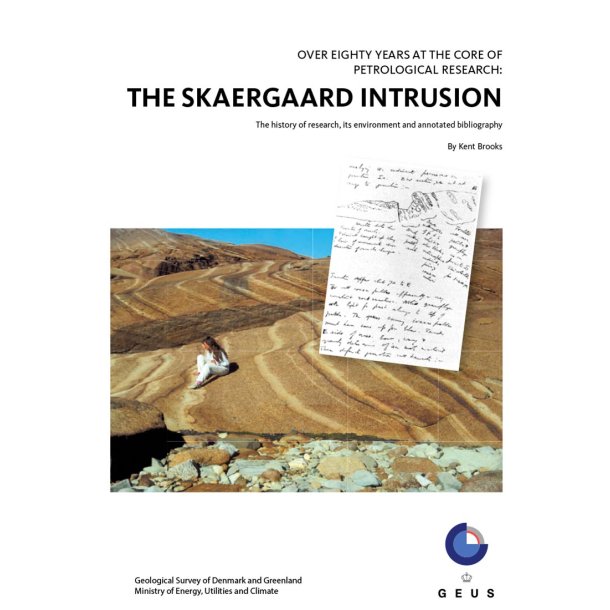
The Skaergaard intrusion, Kangerlussuaq, East Greenland is one of the most famous geological localities in the world, certainly the most thoroughly researched igneous intrusion. Since the memoir of Wager and Deer in 1939 it has played a key role in petrological thinking, being a type example of the closed system differentiation of a ferro-basaltic magma. Skaergaard’s differentiation trend has also figured prominently in the so-called “granite controversy” as to how granites arise as it is thought to refute the idea that granites are differentiation products of basaltic magmas (but see a reversal to this idea by Hunter and Sparks, 1987, who claimed that Skaergaard had indeed produced copious quantities of granitic material).
Read more about "Over eighty years at the core of petrological research: The Skaergaard intrusion" on GEUS website.